Friday, January 19, 2007

Comet watching - again!


I've been gazing skywards for the past three nights and couldn't resist taking more photos of McNaught's comet.
It's a once in a generation experience and in the next day or two it will disappear from view.
The photo is a poor reproduction, but the sight through my binoculars was supurb.
Wow!!

Wednesday, January 17, 2007

Life is a shipwreck - Voltaire


I usually allude to the trials and tribulations of life as a topsy-turvy roller coaster ride.
Yesterday, I read these words from Voltaire:

“Life is a shipwreck, but we must not forget to sing in the lifeboats”

Good advice, I believe.

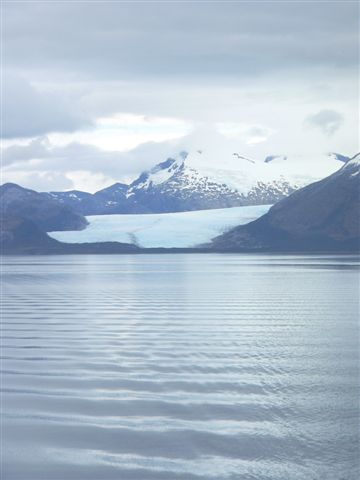
Photo: M Muir - Drake Passage off Tierra del Fuego, S. America

'Music is silence asleep'

I suppose I'm a bit like Horatio Hornblower - no I am not tone deaf, but I don't like listening to music.
And, even though I live alone and can go days without speaking to anyone, I hate background sounds like a TV or radio.
Most people will probably regard this as odd.
Yet I live in a house with a metal frame and metal roof which creaks, cracks and bangs regularly as the metal expands and contracts - and I don't notice it.
I guess the old seafarers didn't hear the creaks and growns of a timber ship.
For me the words, 'Music is silence asleep', qualify my feelings.

McNaught's Comet - with a tail 3 million km long!


I am amazed that the McNaught Comet is visible to the naked eye here in Bakers Hill, Western Australia.
It is not much more than a pinprick in the dying evening light, but I can see its shape and actually see it moving, albeit very, very slowly as it drops towards the horizon.
What amazes me are the statistics I have read.
Just fancy, I am standing in the garden with my camera, looking up at the comet's steamy tail which could measure up to 3,000,000 kilometres in length.
I discover that the icy core is only 300 meters across, yet the fuzzy coma surrounding the ice core (which measures only 300 meters), is around 100,000 kilometers across.
Those figures are mind-boggling.
I don't know why but I expected the comet to be orange but it was pure white, its brilliant light reflected from the sun.
Photo : M Muir

Tuesday, January 09, 2007

South African Boer Goats for sale


The goats haven't had much attention lately on the blog or on the farm.
With the driest year on record in 2006 and little feed on the ground and the dam almost dried out, the goats have had theri noses pushed out of joint.
In fact I have recently sold several of my good does.
And I have just advertised Akhenaten (318) my current three year old buck.
He's a nice fellow, well marked and very quiet but I don't want to use him again this coming season, so he must go.
Because my goats are all social animals I hate to part with them, but, like real children, the kids have a habit of growing up!
Photo: A great profile - Akhenaten (OUX318)

Thursday, January 04, 2007

Lost World of Sailing Ships 1780-1880


The above title is the subject of a Distance Learning (Internet) course offered by Exeter University in England.
It provides and insight into the maritime economy of the South West of England in the nineteenth century and looks at how the world of sail changed during that time.
Subjects included in the syllabus include:

Vessels: their categories and cargoes.
Mariners: their education and careers.
Ports: their rise and fall.
Shipbuilding and shipwrights:
Sailmakers, blockmakers, ropemakers: the role of ancillary trades.
Privateers: the last days of privateering.
Smugglers: the organisation of smuggling and its eventual control.

The one sememster (non-accredited) course commences in February and has no set assignments. For further info from the university's Distance Learning Department go to: www.education.ex.ac.uk/dll/
I'm pleased to say I am enrolled in this course.

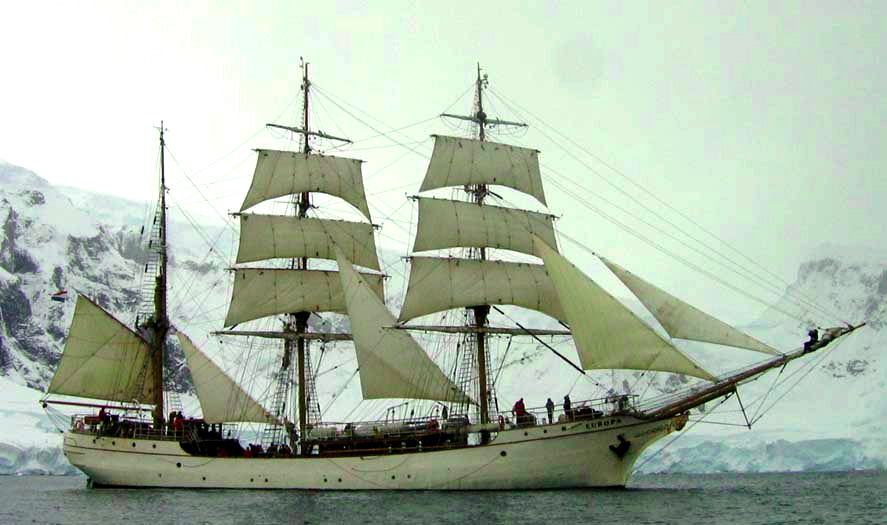
Photo: Europa - Victory Tours out of Ushuaia, Tierra del Fuego offering a 53 day sail in 2008 - Cape Horn to the Cape of Good Hope via Antartica.

All I need is about 8000 euros and a body 25 years younger - You can't stop dreaming, can you!

Wednesday, January 03, 2007

A doll in History - article in Doll Magazine


This very nice feature article was written by Susan Brewer and appears in the Dec/Jan issue of Doll Magazine which is out now in the UK and USA.
I am delighted to have already received some feedback from a reader in the US.
The article is about my latest book, The Twisting Vine, and about my association with dolls and mohair - and goats.
If you would like to receive a readable copy by email you can write to me via the CONTACT ME link on my website - just click on the website link at the top of the blog.
The Twisting Vine is available from www.Amazon.co.uk and leading UK bookshops.
It will hopefully be listed as available on the Amazon US site shortly.

The Twisting Vine by Margaret Muir - Review


Since publication of this review I have received some comments from Doll Magazine readers in the USA as Amazon US lists The Twisting Vine but says it is not available.
I have written to them to ask why this is so as the book is available.
You can currently order the hardcopy from www.Amazon.uk.co or the other major UK booksellers.
A second edition (large print) is due out in May 2007 from Ulverscroft in England.
I'm sorry the print is too small to read on this picture, however if you want a copy you can contact me directly through the CONTACT ME page on my website and I will forward a copy via email.

Tuesday, January 02, 2007

Sailing into 2007


My New Year resolutions for 2007 include writing two books and I'm pleased to say the first is underway.
It's a sea story (age-of-sail era), and in the past couple of weeks I've managed 25,000 words on paper - very rough draft, however!
As part of my background research, I've just finished reading, A Mariner of England.
It's a warts-and-all story (first published in 1908) written by William Richardson, a seaman who served on both merchant and naval ships around the time of the Battle of Trafalgar.
Richardson saw active service - mainly as warrant officer/Gunner (23 years)- in the Channel, West Indies, Calcutta, Flushing and off Portugal.
The detailed picture he paints so eloquently provides an amazing insight into life on the sea 200 years ago.
Reading between the lines it's not hard to spot the differences between the two services, eg: pay scales and punishments.
Interestingly, both merchantmen and naval ratings were regularly duped over money - payment of wages or prize money.
The degree of severe and regular punishments on naval vessels was directly related to the calibre of the Captain (mainly) and officers. For example on one ship Richardson says that two seamen would not dare be seen even talking together on deck - on another the first lieutenant gave him a roll of cloth to make himself some clothes.
One thing that amazed me was the number of ships which sailed together in convoys - naval vessels escorting merchantmen - sometimes there were several hundred sail (400 on one voyage) and it's not surprising that occasionally they got themselves tanlged up together.
William Richardon's autobiographical story is well told and very readable.
It certainly transported me back to the late 1700s and early 1800s and put me in the mood for writing in that era.
If you are interested in the sea or history, or just want an interesting read, I would thoroughly recommend it.
Available on Amazon

Thursday, December 21, 2006

Reflections on Yule - a Pam Ayres lookalike

It’s here again, it’s Christmas time, that glorious event,
That brings together families and relatives and friends.
A time of cheer, of carols, and presents on the hearth.
But most of all the memories that Christmas Day imparts.

And as I sit surrounded by the children, great and small,
The mind escapes to wander through my Christmas memory haul:
To six foot drifts of icy snow on Hallowed Christmas Day,
The relatives all stranded over 60 miles away.

And Mother’s still preparing food, enough to feed an army.
Dad pours himself another beer and says he thinks she’s barmy.
And the little bells that tinkle hanging on the Christmas tree
Remind me of the Christmas that we spent in Sydney.

Mother slaving in the kitchen with a chicken not long dead.
As the temperature is rising Dad lies sweating on the bed.
But the grid, it cannot take it as the mercury explodes,
So it has to shut the power or the station will implode.

And Mum in desperation, screams, “Who turned the power off?”
“Oh God, what next!” said father, as he gets up in a huff.
“Don’t fret yourself,” said Uncle Frank. “Just leave it up to me,
I’ll fire up the Metters and we’ll have the chook for tea.”

“No, put it on the driveway,” said Dad between his beers
“And let it simmer slowly then we’ll have it for New Year’s.”
And the broken glass it tinkled, like the little Christmas bell
As the chook became a missile! “And you lot can go to hell!”
*
Oh Tannenbaum, Oh Christmas tree pray tell me your lament
As you stand there somewhat naked in your bucket of cement.
You’re leaning on an angle like a ship that’s going down,
With your arms held up for mercy before you finally drown.

But what of Yule-tide blessings, and the yule log on the rug,
As reflection on the Yule-time give my lonely heart a tug.
“You’ll do this and you’ll do that and you’ll not answer back
You’ll not kick your cousin Rachel or I’ll promise you a wack.
You’ll say thank you for your presents. You’ll be nice to Uncle Matt.”
I think someone should take You’ll-tide and feed it to the cat!
*
Hey Christmas! Merry Christmas! Merry? – That’s not what I would say.
I’d say they’re all as drunk as skunks or heading on that way.
And forget the Christmas carols, Cousin Carol’s full of song
And she’ll pass out on the sofa before too very long.
And Mother’s trying very hard to dignify the scene
Announcing that we all sit down for the message from the Queen.
*
I know for me, the memories of Christmas linger on,
As I hear my warbled hummings of that famous Christmas song.
But Hark - not Herald Angels, that’s young Jason, I can hear,
And the piercing sound of screaming drifting loud upon the air.
And his mother’s faintly sobbing, says the trampoline was torn
And the siren bells are wailing on that joyful Christmas morn.
*
So to all of you at Christmas, I wish you Yule-tide cheer
As I read my Mr. Dickens there’s one true voice I hear
That dear old man, that Mr Scrooge, astute – no not a mug
He, only he, had got it right, Christmas is - Humbug!

Merry Christmas!

Poem by M Muir (2000)

Saturday, December 16, 2006

124 degrees F (54 C) in the sun


I imagine the response I will get to this post.
No on eis going to believe it - but it's true.
As it was jolly hot today and I stayed inside most of the day with the aircon on.
At 4.45 pm I ventured out to check the goat's water troughs and couldn't believe how hot it was.
It was like walking into the proverbial oven (cliche - but true).
I couldn't believe th heat so went inside and got my thermometer - old but reliable, and when I walked back into the sun the mercury just started to rise.
I know that temperatures which are officially recorded are shade temperatures, whereas I was in the garden in the sun, but it was late afternoon and the sky was hazy.
What I recorded (and photographed) was - one hundred and twenty four degrees farenheit or 54 centigrade!
Then I let the thermometer cool off and took the shade temperature under the Verhandah - a relatively cool 45 C or 112F.
I just hope this is not a sample of the summer ahead!
Phew!!
Photo: M Muir - Location 75 km inland from Perth, Western Australia.

Sunday, December 10, 2006

Pioneer in marine photography - Douglas P. Wilson


Douglas P Wilson (1902- 1991), a marine biologist, was internationally acclaimed for his photographic studies in the field of natural history.
He was the first to photograph living plankton under the microscope.
Wilson’s work of the 1920s and 30s is highly regarded for its artistic excellence and his photographs still appears in books and journals around the world today.
Amongst the many specimens he captured on film is Noctiluca, a luminous dinoflagellate.
Wilson writes: When it is present in dense forms…when agitated by the dip of an oar or the breaking of a wave, the sea becomes brilliantly luminescent, the water glowing with light.
The phenomenon of marine luminescence is something which intrigued men for countless generations (including Robert Fitzroy, Captain of HMS Beagle).
Douglas Wilson’s interest in the photography began as a three year old when he posed for a family photo - his head fixed in a clamp so he couldn’t move during the extended exposure time required in those days.
At age 11 he bought his first cardboard box camera for a penny, took it home and successful developed his first photograph.
Wilson’s memoir, A Sea Life in Focus, edited by his daughter, biographer, Hester Davenport, is illustrated with original photographs.
It records not only of the marine specimens he photographed, but the methods he used and the specialized equipment he constructed in order to do so.
For his pioneering work in marine photography, Dr Wilson received many awards including the prestigious award of Honorary Fellowship of the Royal Photographic Society (1987).
Image: Larva of Long-armed Starfish metamorphosing by D P Wilson.

Monday, December 04, 2006

Happy 96th Birthday, Mum


Today, in England, my mother celebrates her 96th birthday.
She was born, Ethel May Ettershank, on 3rd Dec 1910.
Mum married Frank Leak (died 1972) and has been able to boast three children, 7 grandsons, and 4 greatgrandsons and at last, and most recently, one great grandaughter.
Mum presently lives in a Methodist local Preachers' residential house in Woodhall Spa.
She tells me that she will be having a cake to celebrate her birthday but assures me it won't have 96 candles on it.
I wish I could be there to help her celebrate.
Happy Birthday, Mum xxx
Photo: Ethel Leak aged 16 years

Saturday, December 02, 2006

World AIDS Day - a poem

AIDS (Africa)

moist lips kiss death
in momentary bliss
black silk on blackness slides
earth’s crimson blood pulsates
through vented crust
as warm life pumps
explosive virulence
in love’s disguise

pale jacarandas
scatter in the storm
rudderless coracles
tossed on the turbid flow
ebony tears engorge
dark drowning pools
the nightmare-dreaming
masquerade of love

discrimination
absent in this game
man preys on brother, wife,
woman, her son
a continent cries out to muted globe
Ngorong’s crater
muffling the sound
- the predator waits

across the plains
the human herd in flight
stalked silently by Nature’s genocide.

I wrote this poem in 2002 - little has changed since then MM

Tuesday, November 28, 2006

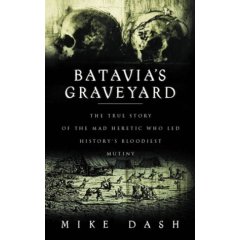
Batavia’s Graveyard – history’s bloodiest mutiny (1629)


Though Captain Cook is credited with discovering Australia, Dutch trading ships had been sailing a course parallel to the continent’s west coast for almost 200 years. Of those ships, several had been lost off the uncharted coastline.

Mike Dash’s, Batavia’s Graveyard, is the true story, told in narrative form, of the worst civilian maritime massacre ever recorded.

In the autumn on 1628, the East Indiaman, Batavia, the largest and newest ships of the Dutch East India Company’s fleet set sail from Holland loaded with a King’s ransom in gold, silver and gems. She is bound for Java on a route which carries her close to the coast of the yet uncharted continent of Australia.
On board is Jeronimus Cornelisz, who during the voyage plots a mutiny with the Captain and other members of the crew.
When the ship is wrecked and the Company’s Agent sets sail in an open boat to seek help. He leaves over 200 survivors on the islands without water food or shelter.
In order to secure his survival, Cornelisz seizes control and begins to systematically kill the survivors. Without tainting his own hands, he forces his henchmen to hack to death more than 120 of men, women and children.
Batavia’s Graveyard is no fiction story. It is a poignant and chilling true re-enactment of the events which took place.
And it is said that if you happen to land at Houtman's Abrolhos, the tiny uninhabited archipelago just off Australia's west coast today, you can still find the sun-bleached bones of the victims.
Evocative, unbelievable and certainly unforgettable.

Batavia’s Graveyard by Mike Dash (2002)

Monday, November 27, 2006

HMS Beagle (replica) - to sail again


The vision of the Beagle Project Pembrokeshire is build a replica of the three masted barque which carried Darwin on his epic voyages (1831-1836). She will be “built of larch on oak frames, the hull will be copper sheathed and the boat will be fitted with modern propulsion, navigation, safety and communications equipment.”
Like the 1830’s vessel, she will be equipped with the latest technology, “to allow aspiring and practising scientists to use her as a platform from which to collect specimens and on which to store samples and stage experiments". She will be an inspiration to a new generation of scientists.
And on her first major voyage (2009) she will circumnavigate the globe, retracing the voyage the Beagle took in Darwin’s day.
The original ship:
When the Beagle was launched on the Thames in 1820, she was brig-rigged carrying only two masts with square-rigged sails. Because this design of ship sat low in the water and had a habit of turning-turtle if mishandled in heavy weather, it was sometimes referred to as a ‘coffin ship’.
In 1825, however, she was re-rigged as a barque with the addition of a mizzen (third) mast fitted with fore and aft sails. This configuration made the ship more manoeuvrable.
When HMS Beagle was commissioned in 1831 to continue survey work in the Southern Ocean, she was again refitted under the direction of Robert FitzRoy, her captain, who ensured she benefited from the latest in nautical technology. For example, for the first time in a Royal Navy ship, lightening conductors were fitted to all the masts.
At 235 tons, the Beagle’s masts and spars were extra strong, and chains had been used in place of ropes where possible.
It was under the command of skilled navigator and surveyor, Captain FitzRoy, the ship carried the young naturalist, Charles Darwin on the voyages which were to lead to his theory of evolution.

For more information on the Beagle Pembrokeshire Project go to:
The Beagle Project.

Photo (M. Muir - HMS Endeavour replica)

Friday, November 24, 2006

The Beagle Channel - revisited


There are still places in this world where you stand in awe.
Where there is an aura of solemnity.
The Beagle Channel is one of them - and it is something you don’t expect when you just around the corner from Cape Horn.
Apart from its stark beauty, what struck me about it was its solemn stillness.
Glaciers and ice make little sound.
New-fold mountains sleep, their great stubbled chins pointed skywards while above them condors the size of worker bees wheel in effortless in silent circles.
A thousand streams and waterfalls glisten as they slip relentlessly over honed rock faces only to disappear in the wooded banks below.
Penguins and occasional whales grace the water, while on the scattered rocky outcrops, seals wallow unperturbed while on tiny islands innumerable cormorants hold out their flaccid wings to dry.
Beneath the crystal waters, tall weeds wave their golden fronds as the small boat passes above them leaving barely a ripple on the surface.

The Beagle Channel stretches 120 miles long and two miles wide, and Charles Darwin likened it to the valley of Scotland’s Lockness.
In his words:
The lofty mountains rise to a height of 3,000 and 4,000 feet…covered by a wide mantle of perpetual snow, and numerous cascades pour their waters through the woods, into the narrow channel below. In many parts, magnificent glaciers extend from the mountainside to the water’s edge. It is scarcely possible to imagine anything more beautiful than the beryl-like blue of there glaciers and the dead white of the upper expanse of snow. (The Voyage of the HMS Beagle).

The Channel is probably unchanged since the time HMS Beagle made its first passage in the 1830s and it will be that same scene which will greet the replica ship when she sails south in a few years time.
Thanks to Peter Grath, I have just learned of the Beagle Project Pembrokeshire,
Zoologist, Peter, and David Lort-Phillips director of the Darwin Centre for Biology and Medicine in Wales are co-founders of the project to build a replica of the Beagle.
For more information on this project go to:
The Beagle Project.

Wednesday, November 15, 2006

Squidoo Lens

In case you are not familiar with SQUIDOO sites - they are called 'lens' and are somewhere between a website and a blog.
They are free from http://www.squidoo.com and are easy to set up.
Squidoo is also a place to search for subjects you are interested in written by folk like you and me.
The profit from the lens go to you or the charity of your choice.
Having just finished reading Imperium my mind wandered back to my holiday in Rome this summer, and to the other places I visited in the Mediterranean.
As a result, I have set up a new Squidoo lens about that cruising holiday (mainly from material I posted earlier on this blog).
You can check the new site at: http://www.squidoo.com/cruisingeurope
I'm following that with a site on Cruising Antartica and one on Sailing across the Atlantic.
As I don't watch TV, it keeps me out of mischief.

Of my other Squidoo lens the most popular is still Tall Ships followed by The Black Thread, the lens wich tells about my forthcoming novel.
You can find those two links on the heading of this page.

Saturday, November 11, 2006

Imperium by Robert Harris


Imperium (pub Sept 2006) is an incredible read - a fictionalized biography of Cicero, the Roman advocate, orator and writer who became one of the most powerful men in Roman history.

It follows Cicero's career from his early days as a young advocate to the point of him becoming consul-elect. Not an easy path to tread with enemies as powerful as Julius Caesar and later, Mark Antony.

Battling bribery, massive corruption and treachery, Cicero used the only weapon at is disposal – his voice – to win support for his ideals from the aristocrats, tribunes, senators and the people of Rome.

His story is told through the gentle voice of his
slave/secretary/confidant, Tiro.

For me, Harris's historical novel brings to life this segment of Roman history
Thoroughly recommended.

11th November - Rememberance Day


Lest we forget

Poppies, cultivated since the Middleages, have long been a symbol of rememberance. There are many varieties.
This is a beautiful, old-fashioned peony type bloom.
Photo: M Muir

Tuesday, November 07, 2006

Hornblower gets my ship's biscuit!


If you browse through Yahoo you will find specific groups dedicated to the various fictitious naval heroes - characters who have almost become household words, eg: Jack Aubrey, Richard Bolitho and Hornblower. And their creators are as well known as their protégés.
Having written one sea story (Sea Dust), and with a desire to write another, I decided it was time I investigated what it was that the authors of these characters wrote to attract such a large readership and to maintain them over a long period of time.
I tried Patrick O’Brian some time ago and only managed to finish Master and Commander. Half way through, The Far Side of the World, I stopped. For me, O’Brian’s prose consists of too many long sentences which need reading three times over. And he goes off at a tangents at times rather than sticking with the story.
I’ve also tried a couple of Alexander Kent’s. Unfortunately I couldn’t get the early books and started midway through the series where both Bolitho senior and Bolitho junior appeared. I found the double presence confusing.
My other comment is that in all Kent’s scenes at sea – I never once felt the movement of the ship!
Julian Stockwyn is on my list but I haven’t sampled his Kydd series yet.
Last week I bought the first six books of the Hornblower series and have already whizzed through book one and am now onto the second.
All I can say is I am loving the way CS Forester writes. Sure there are a lot of nautical terms but the settings are on fighting ships. Also there is plenty of action (much of it tongue in cheek) but the stories are what I would describe as rollicking good fun with lots of variety. His characters are interesting. I would describe Hornblower as mostly human with a tendency at times to superhuman qualities.
The series I would say encompasses the journey theme, the hero theme, good over evil story and even the Cinderella theme all rolled into one. They have all the ingredients of a good yarn and I’m looking forward to reading them all.
The complete series of CS Forester's Hornblower series are available from Amazon

Thursday, November 02, 2006

A long summer's day in Antarctica


For us here in Australia, the southern summer is just around the corner, while for you folk in the northern hemisphere, winter is looming.
Here's a thought!
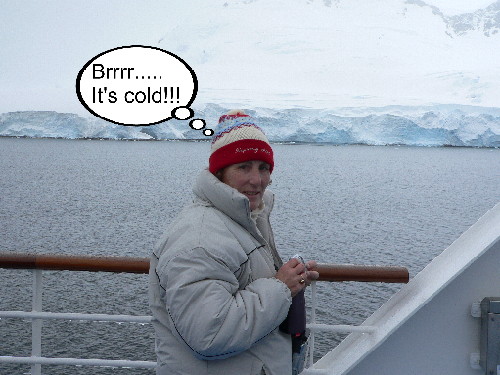
This picture was taken from the deck of the Oceania as the ship cruised the Antarctic Peninsula.
It was Boxing Day, 2004 - the middle of summer - and it snowed!!
Have to admit my hands were freezing but I couldn't operate the video recorder with gloves on.
What a fantastic experience that was!

Photo: PJ Ryan

Wednesday, November 01, 2006

Tall ship adventure - The White Squall


I thoroughly enjoyed watching the DVD of the White Squall.
It’s the true story of a tall ship adventure with a group of youths on a fully rigged sail training ship in the 1960s.
It brought back memories of my times on the STS Leeuwin and the voyages I took on the Indian Ocean a few years ago.
It also reminded me of the tropical low which struck the Star Clipper it neared the West Indies near the end of my voyage across the Atlantic.
Quite a storm – but what an experience!
I’ve been looking at the voyages offered by Victory Cruises on the Europa which sails out of Ushuaia on Tierra del Fuego. It’s voyages include the Antarctic Peninsula, Falkland Islands and across the South Atlantic to Cape Town.
Would love to go on that – but it will have to remain on the wish-list!

I was particularly struck by the final lines of dialogue in the movie.

“You can’t run from the wind. You face the music and keep going.”
How true. Just like life!

The image, by Rod Thompson, appears on the website of http://www.victory-cruises.com organisers of tall ship sailings in Antarctic waters – including voyages on Europa.

Saturday, October 28, 2006

Reflections on the canal

‘I’ve no idea how the working boatwomen managed to crochet with hands chapped and roughened by the cold and wet.’

Elizabeth Bryant, lace-maker extraordinaire describes herself as a Jack-of-all-trades, Master-of-non, despite her ‘Master’ accreditation in Cabin Lace.
Over the years Liz has turned her hand to many crafts, glass etching, stained glass and painting, to mention a few. ‘At one time I sold Victorian Peg People in Liberty in London,’ Liz said. ‘Children with kites or hoops; ladies with parasols. I also made models of several well-known smugglers, as well as thatched cottages, oast houses and churches. I enjoyed researching the smuggling history of the south east of England.’

But when Liz and husband, Paul bought a share in a narrowboat, she read up about the lives and skills of the working boatwomen. ‘I felt it was really important not to let them die out unappreciated. The Waterway Craft Guild does a lot to keep the old canal skills alive,’ she said. And it was through the Guild that she applied to become a ‘journeyman’ in the craft of Crochet and Cabin Lace.
Liz says she was most surprised when she was accredited a ‘Master’ and now, despite her vision impairment, tries to be worthy of the title by spreading the tradition as much as possible.

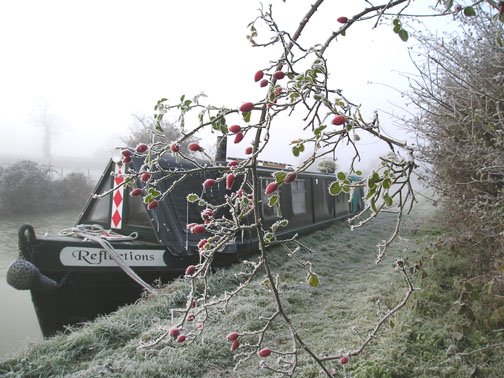
Today Liz and Paul have their own ‘project’ boat, Reflections. She says that when her husband has time from making double basses, ‘cellos and violas, they enjoy the beauty of the Inland Waterways.
The photo of Reflections was the one Liz used last year as a Christmas card.
It’s an ideal seasonal picture with the narrowboat crusted in a layer of frost. But Liz says, ‘Breaking sheets of thin ice on the canals is very musical, but frozen ropes hurt my hands. I’ve no idea how the working boatwomen managed to crochet with hands chapped and roughened by the cold and wet.'

Another article about Liz’s work was posted earlier. You can find out more about Liz and her lacework at http://www.englishcrafts.co.uk/
Also read about Paul Bryant, who 30 years ago taught himself to make violins. Today Paul specializes in basses and his instruments are found in many British orchestras.
http://www.bryantbasses.co.uk

Wednesday, October 25, 2006

White ensign flies in Nelson's memory


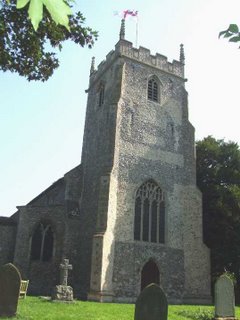
The Church of All Saints in Burnham Thorpe flies an 18th century White Ensign in memory of Admiral Lord Nelson who was christened there by his father, Edmund - the rector.
Nelson had written that he would expect to be buried there along with his family, but his final resting place after the Battle of Trafalgar was St Paul's Cathedral.
When raised to the peerage in 1798 Nelson took the title Baron Nelson of the Nile and of Burnham Thorpe.
Only one other church is Britain is permitted to fly the White Ensign and that is St Martin-in-the-Fields.

The excellent photo comes from author, Hester Devenport. Hester's biographies of both Mary Robinson (Perdita) and Fanny Burney are available at http://www.amazon.co.uk

Saturday, October 21, 2006

Trafalgar Day - 21 Oct 1805

What better day to read the final pages of Pockock's book, Trafalgar, than today - the 201st anniversay of that awful battle.
As the majority of his story is made up of letters written on board the British, French and Spanish ships immediatley prior to, or after the battle, the words are poignant - the descriptions of carnage of both men and vessel - unbelieveable.
Likewise, Nelson's last few hours spent below deck are reported in such a way one feels as though one is present at his passing.
And following the French defeat, Pockock writes of the gales which lashed the fleets for several few days, sinking many of the prizes and robbing the seaman of their hard earned rewards.
Ironically hundreds of those seamen and marines, who survived that most horrendous sea battle, died at the hands of the hurricane-force storm, uncerimoniuosly joining their mates in the deep.
I now wish I had read the book before visiting Victory this year.
I must go back one day.
Photo (M Muir): The Royal barge of Charles 11 (built 1670) carried Nelson's coffin along the River Thames. (Royal Navel dockyard museum, Portmouth)

Monday, October 16, 2006

Canal crafts - the skill of the boatwoman

What is this beautiful hand made item?
At a quick glance it could be an iced birthday cake.
No, you say!
Or a lace garter – elegant enough for a bride to wear!
Believe it or not, this is a pair or horses’ earcaps made in fine lace and decorated with brightly coloured tassels, the type crocheted by the boatwomen on the canals to keep the flies from the boat-horses’ ears a century ago.
On her website, Liz Bryant displays the crafts of the boatwomen who decorated their barges by trimming the shelves, portholes, chimneys and even their horses with lacework in various designs.
I find it sad that this sort of tradition, like the barges themselves, is dying and unlikely to return. Today, women’s hands are now occupied on production lines or keyboards, while few fingers learn to master a spinning wheel, a crochet hook or even a pair of knitting needles.
Having read about the skills of the boatwomen while researching my latest novel, I made sure the traditonal lacework was mentioned.
In my own defence, I can say that in my latter years, I learned how to spin sheep wool, alpaca fibre, cashmere and mohair and have made jumpers from my own wool.
I can tan a calf and goat hide and have made many a teddy bare and soft toy. I’ve even tanned a fish and snake skin.
And when my boys were growing up, I taught them both how to knit.
I wonder if today’s society has really progressed.
I don’t think most people could survive today without technology.

Elizabeth Bryant, an accredited Master of Crochet and Cabin Lace in the Waterways Craft Guild, continues this tradition, making crochet nets in a wide variety of traditional and original designs.
I thank Elizabeth for the image of the horse’s earcaps.
You can visit her site at: http://www.englishcrafts.co.uk/

Wednesday, October 11, 2006

Canal story - The Black Thread

Delighted to say that yesterday my latest manuscript was accepted by Robert Hale in London.

The Black Thread is a dramatic tale set on the Leeds and Liverpool canal and around the model-mill town of Saltaire in 1898.

I hope to see the book published by the middle of 2007.

For an insight into the background to the story, the British Waterways and the town of Saltaire, please visit my new site at: http://www.squidoo.com/theblackthread

Tuesday, October 10, 2006

Anne Whitfield - published author joins Hale stable


Hi everyone and thanks to Marg for having me as a guest on her blog. We share the same publisher in Robert Hale UK, but my first release with that publisher isn't out until Feb 2007.

I live in the beautiful Southern Highlands area of New South Wales, Australia. I'm married with three children and have strong ties with Yorkshire, England.
I write historical fiction, contemporary novels and short stories all of which are set in both Yorkshire and Australia.

My first historical novel - a USA release, is Kitty McKenzie set in York, Yorkshire 1864. Left bankrupt and in charge of her siblings' welfare, Kitty faces an uncertain future that tests her strength of character.
For more information about me and my books please stroll over to my website or blog.
My Website: http://www.annewhitfield.com/ Blogspot - http://annewhitfield.blogspot.com/

Wednesday, October 04, 2006

Reliving 'Trafalgar'


Me thinks its about time I went to sea again.

Would love to write another sea story.

Currently reading Tom Pocock's Trafalgar.

Having walked on the decks of Nelson's flagship, HMS Victory, makes the action, which took place at sea 200 years ago, come alive (see HMS Victory post last month)

Have also just ordered from Amazon, the first five books in the Hornblower series. I am looking forward to reading those - if I can't sail away, I can at least dream a little.

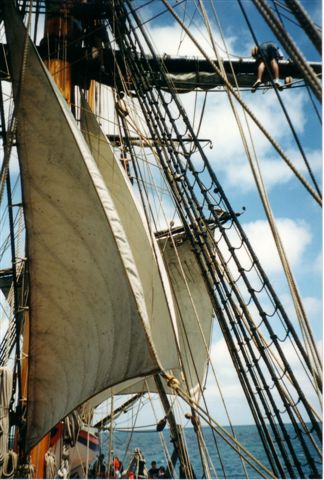
Photo: Setting sail on board HM Bark Endeavour replica in the Indian Ocean off Perth, Western Australia (M Muir)